


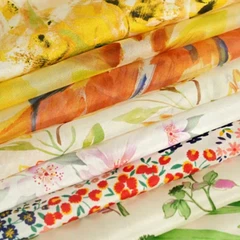
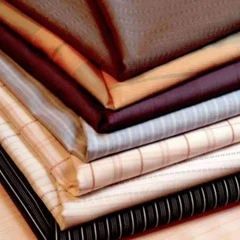
Yarn-dyed weaving is the process of weaving fabrics after dyeing yarn or filament, which can be divided into full-color weaving and half-color weaving. Fabrics woven with colored yarns are generally divided into two methods: yarn-dyed yarns and dyed yarns. Generally speaking, yarn-dyed fabrics refer to fabrics woven by shuttle looms, but knitting machines can also make excellent knitted fabrics. Compared with printing and dyeing cloth, its style is unique, but its price is more expensive. Because the total loss of dyeing, weaving, and finishing of yarn-dyed fabrics is relatively large, and the output produced in Taiwan is not as high as that of white gray fabrics, the cost increases.
Classification:
1: According to different raw materials, it can be divided into yarn-dyed cotton, yarn-dyed polyester cotton, yarn-dyed mid-length wool-like tweed, all-wool tweed, wool-polyester tweed, wool-polyester-viscos three-in-one tweed, slub yarn, pimple yarn, etc. There are also many yarn-dyed fabrics made of silk and linen.
2: According to different weaving methods, it can be divided into plain yarn-dyed fabric, yarn-dyed poplin, yarn-dyed plaid, Oxford, chambray, denim, khaki, twill, herringbone, gabardine, satin, Dobby cloth, jacquard cloth, etc.
3: According to the different process characteristics of the front and rear channels, it can also be divided into: color warp and white weft cloth (Oxford cloth, youth cloth, denim, denim, etc.), color warp and color weft cloth by napping, napping, brushing, shrinkage, etc. Follow-up Fabrics formed by the process (striped cloth, plaid cloth, bed sheet cloth, plaid cloth, etc.) and various yarn-dyed plush fabrics.