



Why Choose Us
Our company having been specialized in digital printing, pattern designing, colour separating and mass production for many years. Our products have been exported to more than 50 countries/regions and we have won a great reputation both at home and abroad.
Quality
We are committed to providing our clients with top-quality dyeing services. We use only the best materials and techniques to ensure that your fabrics come out looking vibrant and true to color.
Expertise
Our team of dyeing professionals has years of experience in the industry. We have the knowledge and skills needed to help you achieve your desired results.
Variety
We offer a wide range of dyeing services to meet the needs of our clients. Whether you need to dye a small amount of fabric or a large batch, we have the resources to get the job done right.
Sustainability
We are committed to reducing our impact on the environment. We use eco-friendly dyeing techniques and strive to minimize waste throughout the dyeing process.


What is Printed Fabrics
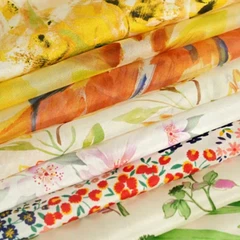
Printed fabrics are made of high-temperature printing and dyeing on gray cloth printing paper. They were very popular in the Tang and Song Dynasties and reached their peak in the Ming and Qing Dynasties. It was once deeply loved by people and was used as a must-have item for dowry bedding and clothing
Benefits of Printed Fabrics
-
Versatility: Printed fabrics can be used in a variety of different ways, including clothing, home decor, and accessories. This versatility makes them a great choice for a wide range of applications.
-
Aesthetic appeal: Printed fabrics add a visual element to any project. They can give a pop of color, add texture, or create a pattern that enhances the overall aesthetic of the item.
-
Customizability: Printed fabrics can be customized to suit your specific needs. Whether you need a particular design, color scheme, or size, you can create a custom printed fabric that is perfect for your project.
-
Durability: Printed fabrics are often durable, making them a great choice for items that will be used frequently or subjected to wear and tear.

Types of Printed Fabrics
The four main methods of textile printing are block, roller, screen, and heat transfer printing
Block Printing
Wooden blocks, carved with a design standing out in relief, are made from solid pieces of wood or by bonding closely grained woods with cheaper ones
Roller Printing
This technique is used whenever long runs of fabric are to be printed with the same design. The washing of back grays and printer' s blankets has also been automated
Screen Printing
The cloth is first laid on a printing table, gummed in position or pinned to a back gray, and then the design is applied through a screen made of silk or nylon gauze stretched over a wooden or metal frame, on which the design for one colour has been reproduced
Heat Transfer Printing
Heat transfer printing, which prints the pattern on paper with carefully selected dyes. The paper is then applied to the fabric by passing the two together through a type of hot calender, and the pattern is transferred from one to the other

What Are The Characteristics Of Printed Fabrics
The characteristics of printed fabrics are different according to different raw materials.
1: Using polyester FDY bright 50D * DTY75D + spandex 40D as the raw material printed fabric, woven with satin weave on the jet loom, the fabric has light, soft, elastic, comfortable, gloss and other characteristics.
2: Printed fabric made of polyester low-elastic silk. The structure of the fabric is satin and plain weave. The fabric is interwoven on an air-jet loom. The grey fabric is then treated with desizing, pre-shrinking, and softening. , Soft and smooth feel.
What are the Applications of Printed Fabrics
The care required by a Printed Fabrics depends upon both fibre content and the application of various finishing processes

Household Textiles
Household textiles, frequently referred to as soft furnishings, are fabrics used in the home. They include items frequently classified as linens, such as bath and dish towels, table linens, shower curtains, and bathroom ensembles

Industrial Fabrics
This class of fabrics includes composition products, processing fabrics, and direct-use types

Composition Products
In composition products, the fabrics are used as reinforcements in compositions with other materials, such as rubber and plastics. These products—prepared by such processes as coating, impregnating, and laminating—include tires, belting, hoses, inflatable items, and typewriter-ribbon fabrics

Processing Fabrics
Processing fabrics are used by various manufacturers for such purposes as filtration, for bolting cloths used for various types of sifting and screening, and in commercial laundering as press covers and as nets segregating lots during washing

Direct-Use Fabrics
Direct-use fabrics are manufactured or incorporated into finished products, such as awnings and canopies, tarpaulins, tents, outdoor furniture, luggage, and footwear

Fabrics For Protective Clothing
Fabrics for military purposes must frequently withstand severe conditions. Among their uses are Arctic and cold-weather clothing, tropical wear, rot-resistant material, webbing, inflated life vests, tent fabrics, safety belts, and parachute cloth and harnesses
How to Maintain Printed Fabrics
Wash Care Instructions For Printed Fabrics
1. Please store items separately.
2. Gentle hand wash using cold water.
3. Avoid strong detergents, hard spinning, hot or industrial wash.
4. Drip dry-do not wring.
5. No excessive rubbing on print.
6. Iron on reverse.
Maintenance Tips for Printed Fabrics
1. Hand-wash inside-out to protect the printed areas.
2. Wash the dark-colored fabrics separately in a bucket.
3. Dip in cold water and use a mild cleanser.
4. Do not use bleach as it can lead to cracking or fading.
5. Drip dry in shade or lay flat to dry.
6. Iron inside-out to prevent affecting the printed areas.
Printed fabric types
First, the pigment is printed on the paper by a printing method to make a transfer printing paper, and then the color is transferred to the fabric by high temperature (heating and pressing on the paper back). It is generally used in chemical fiber fabrics. The pattern is realistic and artistic, but the process is currently only applicable to a few synthetic fibers such as polyester.
The transfer printing process is simple, the investment is small, and the production is flexible. It is currently more popular in the market ... But to be honest, the transfer printing is compared with other printing types. The price is a bit higher, but it has a certain level.
(English: wash out colors) (discharge) discharge print (discharge printing) using dyes that are not resistant to the discharge agent to dye the ground color, after drying, use the discharge agent or discharge dye-resistant color dye printing paste During printing and post-processing, the ground color dye at the printing place is destroyed and decolorized, forming a white pattern on the color ground or a color pattern formed by dyeing of a flower color dye. Also known as pull white or color pull. Can it be as if the clothes have been washed? The color of the clothes seems to have been washed off a lot, and it is mottled ~~ In fact, this is a printing. The principle of printing is to pull out the color of the fabric tissue fiber to make it a lighter color. , Strongly like the washing effect, it is a cooler printing for men's clothing!
This process uses the difference in chemical resistance of different fibers in interwoven or blended fabrics, and applies a drawing agent to remove one of the fibers locally in the fabric by a printing method, leaving the other fibers to form a translucent pattern. Also known as burn-out printing or rotten printing.
The printing method is used to locally apply chemicals that can cause the fibers to swell or shrink, and through proper treatment, the printed and non-printed fibers will have a difference in swelling or shrinkage, so as to obtain products with regular uneven patterns on the surface. For example, cotton printed seersucker using caustic soda as bulking agent. Also called bump printing.
The printing mold is a polyester or nylon screen (flower version) that is fixed on a square frame and has a hollow pattern. The pattern part of the flower plate can pass through the color paste, and the non-pattern part is closed with a polymer film layer. During printing, the flower plate is pressed against the fabric, and the flower plate is filled with color paste, which is scraped back and forth with a scraper to make the color paste penetrate the pattern and reach the surface of the fabric. Flat screen printing has low production efficiency, but has wide adaptability, flexible application, and is suitable for small batch and multi-variety production.
How to Choose Printed Fabrics

Identify the Purpose
The first step in choosing printed fabrics is to identify the purpose. Printed fabrics can be used for various purposes such as dressmaking, home decor, crafting, or quilting. Knowing the purpose will help you narrow down the options.
Color Scheme
The color of the printed fabric is an essential factor to consider. It should match or complement the color scheme of the project. Going for a neutral-colored print is a safe bet, but it doesn't mean that bright or bold colors can't be used.
Quality
The quality of the printed fabric is crucial. Look for fabrics that are durable, easy to wash, and resist fading. It is recommended to purchase from reputable fabric stores to ensure the quality of the fabric.

Pattern Size
The size of the pattern should also be considered. Large patterns are bold and draw attention, while small patterns are subtle and can be used as accents. The pattern size should match the purpose and style of the project.

Texture
Printed fabrics come in various textures such as cotton, silk, linen, or polyester. The choice of texture should match the use of the fabric. Soft and lightweight fabrics like cotton or silk are great for dresses and home decor, while heavy and stiff fabrics like linen or polyester are ideal for bags and upholstery.
Price
Finally, consider the price of the fabric. Printed fabrics come in different price ranges, so choose one that fits your budget. Don't compromise on quality for price as it may end up costing you more in the long run.
Cooperative Partner
Our company was established in September 2008, having been specialized in digital printing, pattern designing, colour separating and mass production for many years. We master huge advantages in manufacturing and producing various printed fabrics made of silk, cotton, wool, rayon, tencel, ramie, linen, polyester, nylon, lint and so on.


Certifications
FAQ
Q: When was Printed Fabrics invented?
There is evidence of Printed Fabrics dating as far back as the 4th century BC. The first common method of textile printing originated in China, where examples of woodblock printing from 220 AD have been discovered. Both block printing and screen-printing slowly became popular throughout Asia, India and then Europe.
Q: What fabrics can be digitally printed?
Q: Can you wash digitally Printed Fabrics?
Q: Is Printed Fabrics copyrighted?
The designs on fabric are copyrightable as a "pictorial, graphic or sculptural work. " Such a copyright would restrict others from copying that fabric pattern. Under the "first sale doctrine," the copyright gives no power to its owner to restrict the use of a the copyrighted fabric design by dressmakers.
Q: How long does Printed Fabrics last?
Q: Does Printed Fabrics fade?
Q: How do you wash newly printed fabric?
Q: What country is known for making printed cloth?
Q: How are fabric prints made?
Q: What is the importance of Printed Fabrics?
Q: What were printed cotton clothes called?
Q: How do you tell if a fabric is licensed?
Q: Can you print on any fabric?
Q: Can you print on velvet fabric?
Q: What fabric is best for t-shirt printing?
Q: What happens when you dye a Printed Fabrics?
Q: What does cotton poplin feel like?
Q: Does cotton poplin wrinkle easily?
Q: What is Printed Fabrics used for?
Q: Which country prints the most?
USA.
China.
Japan.
Germany.
UK.
France.
Italy.
India.
We're professional printed fabrics manufacturers and suppliers in China, specialized in providing high quality products and service. We warmly welcome you to buy high-grade printed fabrics at competitive price from our factory.