


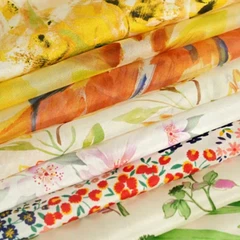
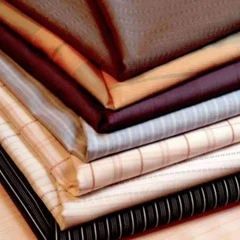

The market application of environmentally friendly printing materials is mainly concentrated in the following aspects:
Textile printing
Environmentally friendly printing materials are widely used in textile printing. As consumers pay more attention to health and environmental protection, the demand for environmentally friendly printing materials shows a rapid growth trend. Textile printing includes clothing, home textiles, wallpaper, carpets, woven ribbons, labels, flags, ties and scarves. The use of environmentally friendly printing materials helps to reduce pollution to the environment and also meets consumers' needs for health and environmental protection.
Digital inkjet printing
Digital inkjet printing technology has been widely used in various textile printing, including cotton and linen fabrics, wool, silk, nylon fibers, etc. The application of environmentally friendly printing materials in this field helps to improve production efficiency and resource utilization, and can also meet the small batch and multi-variety production mode.
Cold transfer printing
Cold transfer printing is a printing method that prints textile dyes on specially coated paper and then uses a cold transfer machine to transfer the pattern to the textile. The application of environmentally friendly printing materials in this field helps to reduce pollution to the environment and also meets consumers' needs for health and environmental protection.
High-speed belt-guided digital inkjet printing
The high-speed belt-guided digital inkjet printing machine adopts the world's advanced industrial-grade stainless steel piezoelectric nozzle, with a maximum printing speed of 40m/h (60dpi, 4 colors) and a maximum printing accuracy of 080dpi. The application of environmentally friendly printing materials in this field helps to improve production efficiency and resource utilization, and can also meet the small-batch, multi-variety production mode.
Knitted fabric printing
The printing of knitted fabrics has developed rapidly in just ten years, but because its dimensional stability is difficult to control during the processing, it is difficult to develop round screen printing of knitted fabrics, especially spandex knitted fabrics. The application of environmentally friendly printing materials in this field helps to improve production efficiency and resource utilization, and can also meet the small-batch, multi-variety production mode.
In summary, the market application of environmentally friendly printing materials is very wide, covering textile printing, digital inkjet printing, cold transfer printing, high-speed belt-guided digital inkjet printing and knitted fabric printing. As consumers pay more attention to health and environmental protection, the demand for environmentally friendly printing materials will continue to grow.