


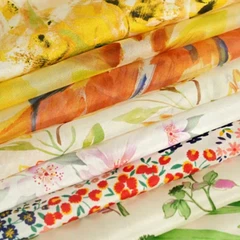
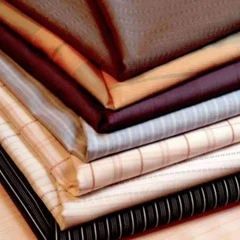
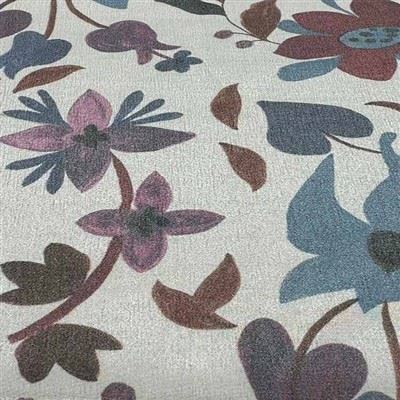
Printed fabric is a widely used textile that can create a variety of patterns and colors on the fabric through different printing techniques. Here are the basic production processes of printed fabric:
1. Designing the pattern
First, the designer will create a digital pattern, which can be hand-drawn or computer-designed. This pattern will be input into the computer to facilitate the subsequent printing process.
2. Preparing the fabric
Before printing, the fabric needs to be pre-treated to ensure that it can accept the pigment and maintain the color durability. This usually includes steps such as washing, bleaching and pre-drying.
3. Printing
Printing is a key step in making printed fabric. There are many printing techniques that can be used for fabric printing, including screen printing, roller printing, digital printing, etc. Each technology has its own unique advantages and scope of application.
- Screen printing: This is a traditional printing technique that applies pigment on a silk screen and then presses it onto the fabric with a squeegee. This method can produce high-quality images, but it is more expensive and suitable for small batches.
- Roller printing: This is a high-speed printing technology that transfers pigment to the fabric through a rotating roller. This method is suitable for mass production, but the image quality may not be as good as screen printing.
- Digital printing: This is a modern printing technology that uses an inkjet printer to print pigments directly onto the fabric. This method can achieve highly personalized patterns and is suitable for small batches or single pieces.
4. Curing
The printed fabric needs to be cured to ensure that the pigments are firmly attached to the fabric. This usually includes steps such as heat treatment or UV exposure.
5. Post-treatment
Finally, the fabric may undergo some post-treatment, such as washing, bleaching, softening, etc., to improve its feel and appearance.
The above is the basic production process of printed fabrics. Different technologies and materials can produce different effects, so when choosing printed fabrics, you need to consider its purpose and the expected effect.