


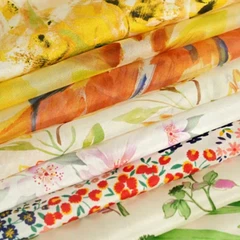
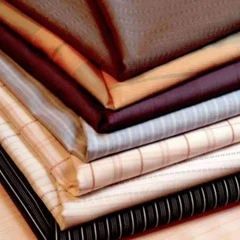
The most important part of reactive digital printing of knitted fabrics is not the printing, but the pre-shrinking. If we do our job well, it will be relatively easy.
Compared with woven fabrics, knitted fabrics are relatively loose, and the fabrics are easily deformed and skewed. The skewed printing often becomes more and more serious, or the width of the fabric becomes smaller and smaller, causing serious quality problems. The loose fabric characteristics create a unique style of knitted fabrics, but also increase the difficulty of fabric processing.
The key to pre-treatment of reactive digital printed knitted fabrics is to make the fabric as close as possible to the woven fabric. How to calculate preprocessing in place?
There are several steps from purchasing knitted fabric from a fabric company to actual printing: opening -> bleaching -> pre-shrinking -> sizing.
When you buy knitted fabric, the fabric comes in a barrel shape and you need to use a slitter to open the fabric. The cloth should be left loose for 24 hours when cutting. During this process, comb the burrs on both sides while cutting.
Bleaching means that certain magazines on the fabric undergo physical and chemical reactions under the action of temperature and compounds, and are completely or partially removed.
digital printing
Suppliers
We master huge advantages in manufacturing and producing various printed fabrics such as silk, cotton, wool, rayon, linen, linen cotton, polyester, nylon, lint, knitted fabrics and so on.
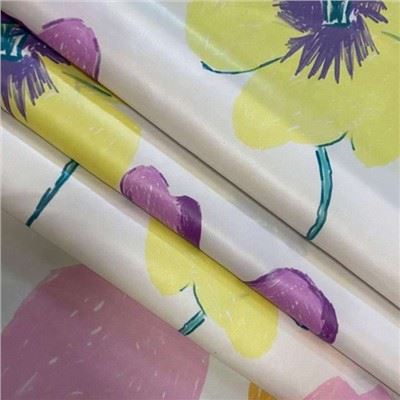
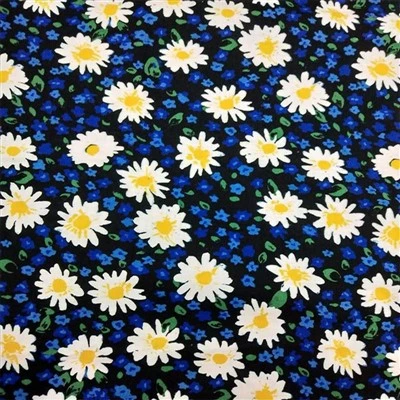
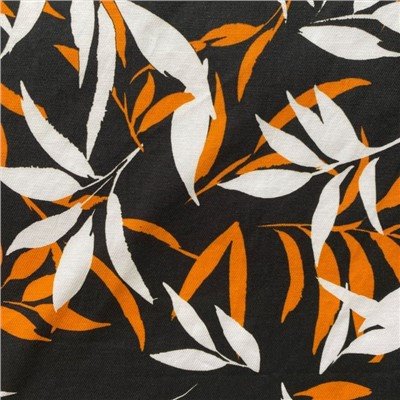
The next step is the critical step, pre-shrinking. Compared with woven fabrics, digital printing of reactive knitted fabrics is particularly important at this step. At this time, attention should be paid to the control of the weight. The burrs on both sides should be smoothed during gluing and shaping, so that it is not easy to wipe off the nozzle during printing. Knitted fabrics are indeed difficult to control, especially pure cotton and rayon. The hygroscopicity of the fabric must also be considered, and the weight will increase a lot.
It is generally required that the shrinkage rate in the warp and weft directions is less than 3%. In addition to obtaining a stable overall size, pre-shrinking can also improve the hand and eye feel of the fabric, allowing the fabric to meet certain weight and stiffness requirements.
Especially fabrics made of cellulose fibers such as cotton, linen, silk, viscose, etc. These fibers are easy to swell and shorten the fiber length, which will affect the dimensional stability of the fabric and its blends. Preshrinking is the key and difficult point in digital printing of knitted fabrics.