


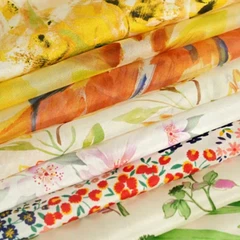
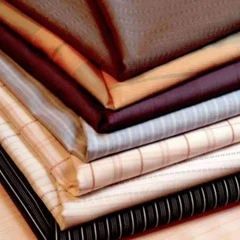
The whole process of textile printing and dyeing processing
1) Original fabric preparation: Original fabric preparation includes original fabric inspection, fabric turning (batching, cartoning, printing) and seam ends. The purpose of original cloth inspection is to check the quality of gray cloth and solve any problems in time. The inspection content includes physical indicators and appearance defects. The former includes the length, width, weight, warp and weft yarn density, strength, etc. of the original cloth, while the latter includes spinning defects, weaving defects, various stains and damage, etc. Usually, spot checks account for about 10% of the total amount. After the original cloth is inspected, the original cloth must be divided into batches and boxes, and printed on the cloth head to indicate the variety, processing technology, batch number, box number, release date and the code of the reprinter to facilitate management. In order to ensure continuous batch processing, the original cloth must be sewn.
2) Singeing: The purpose of singeing is to burn off the fluff on the cloth surface to make the cloth surface smooth and beautiful, and to prevent uneven dyeing and printing defects caused by the presence of fluff during dyeing and printing. Fabric singeing is to quickly pass the flat width of the fabric through a high-temperature flame, or rub it against a red-hot metal surface. At this time, the fluff existing on the cloth surface heats up quickly and burns, while the cloth body is relatively tight and heats up slowly. When it rises to the ignition point, it has left the flame or red-hot metal surface, thereby achieving the purpose of burning off the fluff without operating the fabric.
3) Desizing: In order to weave smoothly, textile mills often sizing the warp yarns to improve strength and wear resistance. The sizing on the gray fabric affects the water absorption performance of the fabric, and also affects the quality of the dyeing and finishing products, and increases the consumption of dyeing chemicals. Therefore, the sizing should be removed before scouring. This process is called desizing. The sizing on cotton fabrics can be removed from the fabric using methods such as alkali desizing, enzyme desizing, acid desizing and oxidant desizing. Alkali desizing causes the slurry to swell and reduce its adhesion to the fibers, and is removed from the fabric after washing. Enzymes, acids, and oxidants degrade starch, increase its solubility in water, and remove it by washing with water. Since acids and oxidants cause serious damage to cotton fibers, they are rarely used alone and are often used in combination with enzyme desizing and alkali desizing.
4) Scouring: When cotton fiber grows, it is accompanied by natural impurities (pectin, waxy substances, nitrogen-containing substances, etc.). After desizing the cotton fabric, most of the sizing and some natural impurities have been removed, but a small amount of sizing and most of the natural impurities still remain on the fabric. The presence of these impurities makes the cotton fabric surface yellower and has poor permeability. At the same time, due to the presence of cotton seed hulls, the appearance quality of cotton cloth is greatly affected. Therefore, the fabric needs to be scoured in high-temperature, concentrated alkali solution for a long time to remove residual impurities. Scouring is the use of caustic soda and other scouring aids to react with pectin, waxy substances, nitrogen-containing substances, cottonseed hulls, chemical degradation reactions or emulsification, puffing, etc., to remove impurities from the fabric after washing with water.
5) Bleaching: After scouring the cotton fabric, due to the presence of natural pigments on the fiber, its appearance is not white enough. When used for dyeing or printing, the brightness of the color will be affected. The purpose of bleaching is to remove pigments and give the fabric the necessary and stable whiteness without causing significant damage to the fiber itself. Commonly used bleaching methods for cotton fabrics include sodium nitrite, hydrogen peroxide and sodium chlorite. The pH value of sodium hypochlorite bleaching solution is about 10. It is carried out at normal temperature. It has simple equipment, easy operation and low cost, but it causes great damage to the strength of the fabric and low whiteness. The pH value of hydrogen peroxide bleaching solution is 10. It is bleached at high temperature. The bleached fabric has high and stable whiteness, good hand feel, and can also remove slurry and natural impurities. The disadvantage is that it requires high equipment and high cost. Under appropriate conditions, combined with caustic soda, desizing, scouring and bleaching can be completed at one time. The pH value of sodium chlorite bleaching solution is 4 to 4.5. It is carried out at high temperature and has the advantages of good whiteness and little damage to fibers. However, it is easy to produce toxic gases during bleaching, pollute the environment, and corrode equipment. The equipment requires special equipment. It is made of metal material, so its application is subject to certain restrictions. Both sodium hypochlorite and sodium chlorite must be dechlorinated after bleaching to prevent fabrics from being damaged by the presence of residual chlorine during their existence.
6) Dyeing Dyeing is a relatively complex process. Different quality cloths have different dyeing processes. Some of cotton, polyester cotton, linen cotton, woolen cloth, silk products, chemical fiber products, blended products, etc. use pad dyeing, roll dyeing, etc. Just dyeing is enough, some must use high temperature and high pressure dyeing, some only dye once, and some need to be dyed multiple times. There are also different processes for using different dyes. Just take basic cotton cloth as an example: Although dyeing can be done through a pad car, it is also the most difficult process, because in addition to the known color control of dyeing, there are many There are unknown things in it, such as the stability of dyes at different temperatures, the control of steam, the control of padding pressure, etc., which are all very delicate tasks. The dyeing long car is divided into two parts, the front car is dyed and the rear car is fixed. The dyeing methods vary according to the types of dyes selected. The dyes generally include reactive, Shilin, vulcanization, and paint. They each have their own advantages and disadvantages, and generally It depends on the required color and cannot be interchanged. Among them, Shilin has the best color fastness, but it is expensive and is not suitable for dyeing dark colors. Light colors are not bright enough. In addition, dyeing dark colors will increase the cost. , and dyeing with dark colors is more difficult to control than reactive dyes, and is prone to fabric stains and other phenomena. The color fastness of reactive dyes is worse than that of Shilin, but dyeing with light colors is more gorgeous, while dyeing with dark colors is easier to control and costs less. .Vulcanization is the worst, the color fastness is not very good, and the AZO ban is not up to standard. But now there is a liquid vulcanization (also called water vulcanization) AZO ban that can meet the standard, but the price is close to Shilin, and the dyeing is not easy to control and it is not yet popular. Only A few people pursue its fading effect and use it. The coating is not comparable, and its fading is very serious. It is the best choice for pursuing the fading effect after washing the clothes. It can be used flexibly with Shilin and active to obtain different washing effects ( Generally, Shilin or reactive primers and paint coatings can solve the white spot problem of single-dyed paints, and the cost increases accordingly). Reactive, Shilin and vulcanized dyeing are basically the same. The difference is that infrared pre-baking Group, two groups or not open. The rear car is completely different. The active ones use salt and soda ash to fix the color, the Shilin ones use hydrogen peroxide to reduce and fix the colors (so Shilin is also called vat dyes), and the vulcanized ones need high-temperature cooking to fix the colors. The water temperature must be above 95 degrees. After the paint is dyed, it is decided whether to bake and fix the color according to the color fastness and fading requirements. The baking temperature is about 195-210 degrees. The dyeing cannot be 100% perfect, and color repair and peeling are inevitable. .Slight adjustments such as applying a lighter coat of paint and using a darker coat of soda ash.
7) Mercerization: Mercerization refers to a process in which cotton fabrics are treated with concentrated caustic soda solution at room temperature or low temperature to improve the properties of the fabric when they are under tension in both the warp and weft directions. After the cotton fabric is mercerized, due to the expansion of the fibers, the natural longitudinal twisting of the fibers disappears, the cross-section becomes oval, and the reverse direction of light is more regular, thus increasing the luster. The increase in the invisible fixed area of the fiber increases the dye uptake rate during dyeing. The increase in orientation increases the strength of the fabric and also has a shaping effect. After mercerization, the alkali must be fully removed by flushing and absorbing, steaming, or flat washing until the fabric becomes neutral. Dyeing Dyeing is a process in which dyes are physically or chemically combined with fibers, or chemical methods are used to generate pigments on fibers, so that the entire textile has a certain color. Dyeing is carried out under certain conditions such as temperature, time, pH value and required dyeing auxiliaries. Dyeing products should have uniform color and good dye fastness. Fabric dyeing methods are mainly divided into dip dyeing and pad dyeing. Dip dyeing is a method in which the fabric is immersed in a dye solution and the dye is gradually absorbed into the fabric. It is suitable for small batch and multi-variety dyeing. Rope dyeing and jigzag dyeing both fall into this category. Pad dyeing is a dyeing method in which the fabric is first immersed in the dye solution, and then the fabric is passed through a roller to evenly roll the dye solution into the interior of the fabric, and then steamed or hot melted. It is suitable for dyeing large quantities of fabrics
8) Finishing Finishing is a textile technology project that gives clothing fabrics wearability and beauty. The following are the common types of textile finishing: The main equipment is: singeing machine, desizing machine, mercerizing machine, liquid ammonia machine, setting machine, preshrinking machine, calendering machine, washing machine, sanding machine, scratching machine Wool machines, coating machines, etc.
Main functions: 1. Sanding 2. Calendering or calendering 3. Ginning or embossing 4. Flocking and transfer hot stamping. 5. Coating (a, dry coating; b, wet coating; c, transfer coating, also called centrifugal paper coating) 6. PVC calendering, embossing 7. Composite (a, TPU film with PTFE film Filming; b, fabric composite) 8. Washing, stone grinding, inkjet, and color fixing processing. 9. Waterproof, windproof and anti-velvet treatment. 10. Antistatic treatment 11. Flame retardant treatment 12. Anti-UV treatment 13. Brushed, sanded, anti-pilling treatment 14. Wrinkling, foaming treatment 15. Stenter shaping, soft preshrinking, etc. Textile treatment The finishing process plays an extremely important role in developing some fabrics with special functions, giving the fabrics special functions and improving the wearing effect.
With the progress of technology, new processes and new materials for post-finishing will continue to appear. Dyeing fabric - color fastness Dyeing fastness is the most important indicator of dyeing fabric.
The ability of printed and dyed textiles to withstand external influences and maintain their original color is also called color fastness. After dyeing and printing, textiles sometimes have to go through other processes, such as milling of wool fabrics, heat setting of synthetic fiber fabrics, etc.; during the wearing process, they are exposed to the atmosphere, sweat stains, and are subjected to external factors such as washing, friction, and ironing. effect. These can cause varying degrees of fading and discoloration of printed and dyed textiles.
The main processes that affect the color fastness of printed and dyed textiles are milling, carbonization, chlorine bleaching, sublimation, etc. The color fastness of dyes or pigments on textiles is related to their chemical structure, concentration and state on the fiber, and the properties of the fiber. Various dyeing fastness test methods are developed to simulate various wearing or process conditions.
The International Organization for Standardization (ISO) has successively formulated various international standards for dye fastness with reference to the standards set by organizations such as the British and American Dye Chemistry Societies (SDC and AATCC) and the European Continental Fastness Association (ECE) (see Textile Standards). and testing and assessment methods.
China also has national standards for various major dye fastnesses, such as:
① Sunlight fastness, also known as light fastness, is divided into 8 levels, with level 1 being the least fast to light and level 8 being the best. Each level has a reference standard sample of blue wool fabric dyed with a specified dye at a specified concentration, which is called the blue standard sample. During the test, the sample and 8 blue standard samples were exposed together for a considerable period of time according to specified conditions, and then compared with the blue standard samples to evaluate the sunlight fastness level of the sample. Since the insolation test takes a long time and is limited by climate change, artificial light sources are generally used. Xenon lamps and carbon arc lamps are commonly used. The spectral energy distribution of xenon lamps is relatively close to that of sunlight.
② Washing fastness is divided into two types: fading and staining. The specified gray standard samples are used for evaluation in 5 levels. The color difference of each level is a geometric interval. During the test, the sample and white cloth are overlapped and sewn together, washed under specified conditions, and dried after washing. Separate the sample from the white cloth, and use the gray fading sample card to compare and evaluate the fading fastness based on the color difference of the sample before and after washing. Level 1 has the largest color difference, and level 5 has no color difference by visual inspection. Compare the staining of white cloth with the gray staining sample card to evaluate the staining fastness of the sample to white cloth. Level 1 has the most serious staining, and level 5 has no staining by visual inspection. There are four test temperatures for washing fastness: 95°C, 60°C, 50°C and 40°C, depending on the use requirements of printed and dyed textiles.
③The friction fastness is also divided into 5 levels. During the test, the sample is rubbed with dry and wet white cloths according to the specified conditions, and then the staining degree on the white cloth is compared with the gray staining sample card for evaluation. The result obtained by rubbing with dry white cloth is the dry rubbing fastness; the result obtained by rubbing with wet white cloth is the wet rubbing fastness. Other dyeing fastnesses can be tested according to specified conditions, and the test results are compared with the gray fading sample card or gray staining sample card to evaluate the grade.
Characteristics and hazards of printing and dyeing wastewater
The daily discharge of printing and dyeing wastewater in my country is (300~400)×104t, making it one of the largest polluters in various industries. Dyeing Wastewater
It is mainly composed of desizing wastewater, scouring wastewater, bleaching wastewater, mercerizing wastewater, dyeing wastewater and printing wastewater. Wastewater must be discharged from the four processes of printing and dyeing processing. The pretreatment stage (including desizing, scouring, bleaching, mercerizing and other processes ) To discharge desizing wastewater, scouring wastewater, bleaching wastewater and mercerizing wastewater, the dyeing process discharges dyeing wastewater, the printing process discharges printing wastewater and soap wastewater, and the finishing process discharges finishing wastewater.
Generally speaking, printing and dyeing wastewater is the mixed wastewater of the above types of wastewater, or comprehensive wastewater except bleaching wastewater. The quality of printing and dyeing wastewater varies depending on the fiber type and processing technology used, and the pollutant components vary greatly. Printing and dyeing wastewater generally has the characteristics of high concentration of pollutants, various types, toxic and harmful components, and high color. Generally, the pH value of printing and dyeing wastewater is 6-10, CODCr is 400-1000mg/L, BOD5 is 100-400mg/L, SS is 100-200mg/L, and the chroma is 100-400 times. However, when the printing and dyeing process, fiber types used and processing techniques change, the quality of wastewater will change greatly.
In recent years, due to the development of chemical fiber fabrics, the rise of imitation silk and the advancement of printing and dyeing finishing technology, PVA slurry, rayon alkali hydrolyzate (mainly phthalic acid substances), new additives and other difficult-to-biodegrade organic matter A large amount of printing and dyeing wastewater enters, and its CODCr concentration has also increased from the original hundreds of mg/L to more than 2000-3000mg/L, BOD5 has increased to more than 800mg/L, and the pH value has reached 11.5-12, thus making the original biological treatment system The CODCr removal rate dropped from 70% to about 50%, or even lower.
The drainage conditions of each printing and dyeing process are generally as follows:
(1) Desizing wastewater: The water volume is small, but the concentration of pollutants is high. It contains various slurries, slurry decomposition products, fiber scraps, starch alkali and various additives. Wastewater is alkaline, with a pH value of about 12. Desizing wastewater whose main sizing is starch (such as cotton cloth) has high COD and BOD values and good biodegradability: desizing wastewater whose main sizing is polyvinyl alcohol (PVA) (such as polyester-cotton warp yarn), With high COD and low BOD, the biodegradability of wastewater is poor.
(2) Cooking wastewater: Large amount of water and high concentration of pollutants, including cellulose, fruit acid, wax, grease, alkali, surfactants, nitrogen-containing compounds, etc. The wastewater is strongly alkaline, has a high water temperature, and is brown. .
(3) Bleaching wastewater: Large amount of water, but lightly polluted. It contains residual bleach, a small amount of acetic acid, oxalic acid, sodium thiosulfate, etc.
(4) Mercerizing wastewater: High alkali content, NaOH content is 3%-5%. Most printing and dyeing factories recover NaOH through evaporation and concentration, so mercerizing wastewater is generally rarely discharged. After repeated use in the process, the final discharged wastewater is still strong Alkaline, BOD, COD, SS are all high.
(5) Dyeing wastewater: The water volume is large, and the water quality varies with the dyes used. It contains slurry, dyes, auxiliaries, surfactants, etc. It is generally highly alkaline, has high chroma, and COD is higher than BOD. More, poor biodegradability. Units with printing and dyeing wastewater that need to be treated can also go to the Wastewater Bao project service platform to consult companies with similar wastewater treatment experience.
(6) Printing wastewater: The amount of water is large. In addition to the wastewater from the printing process, it also includes soaping and washing wastewater after printing. The concentration of pollutants is high, including slurry, dyes, auxiliaries, etc., and BOD and COD are relatively high. high.
(7) Treatment wastewater: The water volume is small and contains fiber scraps, resin, oil, slurry, etc.
(8) Alkali reduction wastewater: It is produced by the alkali reduction process of polyester imitation silk. It mainly contains polyester hydrolyzate terephthalic acid, ethylene glycol, etc., of which the terephthalic acid content is as high as 75%. Alkali reduction wastewater not only has a high pH value (generally >12), but also has a high concentration of organic matter. The CODCr in the wastewater discharged from the alkali reduction process can be as high as 90,000 mg/L. High molecular organic matter and some dyes are difficult to biodegrade. This kind of The wastewater is high-concentration organic wastewater that is difficult to degrade.