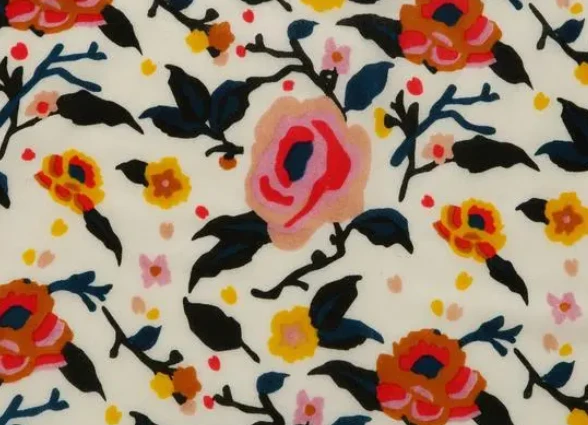
There are several types of clothing printing
Types of clothing printing: direct printing, digital printing, transfer printing, screen printing, discharge printing, reduction printing, shrinkage printing, flat screen printing, rotary screen printing, pigment printing, water slurry printing, glue printing, hot stamping, ink printing, thick board slurry, stone slurry, foam slurry, drip glue, gel, beading, velvet and glue pressing, hand-painted.
Direct printing
Printing on white fabric or pre-dyed fabric, if the fabric base color is white or mostly white, and the printed pattern looks lighter from the back than from the front, it can be determined that this is a direct printed fabric.
Digital printing
The working principle of digital printing is to control the set pattern through a computer, and use a micro-pressure voltage inkjet nozzle to spray special ink onto the textile, also called direct injection, and restore the set pattern after color mixing.
Transfer printing
According to the sublimation characteristics of some disperse dyes, disperse dyes that sublimate at 150℃~230℃ are selected and mixed with slurry to make "color ink". Then, according to different design pattern requirements, the "color ink" is printed on transfer paper, and then the transfer paper with the pattern is closely contacted with the fabric. Under the control of certain temperature, pressure and time, the dye is transferred from the printing paper to the fabric and enters the fabric through diffusion, thereby achieving the purpose of coloring.
Screen printing
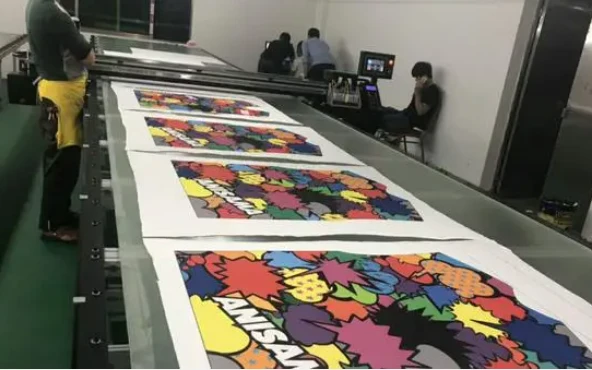
Through the unique screen plate making technology, combined with the photosensitivity and exposure characteristics of the photosensitive glue, the mesh of the upper part of the pattern to be printed is opened and the non-printed part is closed. During printing, since the screen printing glue has a certain scraping effect, the printing color paste can be smoothly penetrated into the cloth surface through the screen printing, so that the print is printed on the clothes, thus completing the printing process of the clothes. This screen printing method is mainly affected by the market, resulting in the diversification of the color and variety of fabrics.
Discharge printing
Use dyes that are not resistant to discharge agents to dye the base color. After drying, use color dyes containing discharge agents or color-resistant agents to print. During post-processing, the ground color dyes at the printing site are destroyed and decolorized, forming white patterns on the color base or color patterns formed by dyeing with color dyes. It is also called white discharge or color discharge. It can make the clothes look like they have been washed, and the color of the clothes seems to have been washed away a lot. The mottled color is actually discharge printing. The principle of discharge printing is to pull out the color of the fabric fibers and turn it into another lighter color, which is stronger than the washing effect.
Reduction printing
This process uses the difference in chemical corrosion resistance of different fibers in interwoven or blended fabrics. Through the printing method, a burn-out agent is applied to remove one of the fibers in the fabric locally, retaining other fibers to form a translucent pattern. It is also called burn-out printing or burnt flower printing.
Shrinkage printing
Use the printing method to locally apply chemicals that can make the fibers expand or shrink on the fabric. Through appropriate treatment, the fibers in the printed area and the non-printed area will expand or shrink differently, so as to obtain products with regular concave and convex patterns on the surface. For example, pure cotton printed seersucker with caustic soda as a swelling agent. It is also called concave and convex printing.
Flat screen printing
The printing mold is a polyester or nylon screen with hollow patterns fixed on a square frame. The pattern on the pattern plate can pass through the color paste, and the non-patterned area is sealed with a polymer film layer. When printing, the pattern plate is pressed against the fabric, and the color paste is placed on the pattern plate. The scraper is used to scrape and press back and forth so that the color paste passes through the pattern and reaches the surface of the fabric. Flat screen printing has low production efficiency, but it has wide adaptability and flexible application. It is suitable for small batch and multi-variety production.
Rotary screen printing
The printing mold is a cylindrical nickel skin screen with hollow patterns. It is installed above the circulating rubber guide belt in a certain order and can rotate synchronously with the guide belt. During printing, the color paste is input into the screen and stored at the bottom of the screen. When the round screen rotates with the guide belt, the scraper pressed against the bottom of the screen and the flower screen are scraped and pressed relative to each other, and the color paste passes through the pattern on the screen to reach the surface of the fabric.
Rotary screen printing is a continuous process with high production efficiency. It has the advantages of both roller and flat screen printing, but it has certain limitations in the fineness of the pattern and the richness of the printing color.
Pigment printing
Also called paint printing, because the pigment is a non-water-soluble coloring substance and has no affinity for fibers, its coloring must be achieved by the coating of film-forming polymer compounds and the adhesion to the fibers. Pigment printing can be used for the processing of any fiber textiles. It is more superior in the printing of blended and interwoven fabrics, and the process is simple, the color spectrum is wide, and the flower shape outline is clear, but the feel is not good and the friction fastness is not high.
Water slurry printing
It is a water-based slurry. It does not feel strong when printed on clothes, and its covering power is not strong. It is only suitable for printing on light-colored fabrics and the price is relatively low. However, one major disadvantage of water slurry is that the color of water slurry is lighter than the color of cloth. If the fabric color is darker, the water slurry can't cover it at all. Watermarks can only be printed lightly and darkly, not darkly and lightly. For high-end watermark effects, the color saturation of general watermarks cannot be so high, but it also has an advantage, because it will not affect the original texture of the fabric and is very breathable, so it is more suitable for large-area printing patterns.
Glue printing
After the emergence and widespread use of glue after water slurry, due to its very good coverage, dark clothes can also be printed with any light color, and it has a certain glossiness and three-dimensional sense, making the ready-made clothes look more high-end, so it has been rapidly popularized, and almost every printed T-shirt will use it. However, due to its certain hardness, it is not suitable for large-area solid patterns. It is better to use water slurry to print large-area patterns, and then embellish some glue, which can not only solve the problem of large-area glue hardness, but also highlight the layering of the pattern; another method is to empty the large-area solid pattern and make it a rotten effect, but it is always a bit hard to wear, so it is better to combine water and glue to solve the problem of large-area printing. There are glossy and matte surfaces, with soft, thin, environmentally friendly and stretchable features. Generally speaking, glue printing is more commonly used.
Hot stamping and silver stamping
Simply speaking, the pattern is prefabricated on a plate (commonly known as gravure), and the process of applying glue on the plate and then transferring the gold on the hot stamping paper to the fabric according to the shape of the plate is called hot stamping. It is generally used on more sporty and casual styles. The patterns generally use numbers, letters, geometric patterns, lines, etc. The lines should not be too childish.
Ink printing
Ink is not much different from glue at first glance, but when glue is printed on smooth fabrics such as windbreakers, the color fastness is generally poor and can be scraped off with a strong scratch with a fingernail, but ink can overcome this shortcoming. Therefore, when making windbreakers, ink is generally used for printing. Features bright color and realistic image.
Thick board pulp
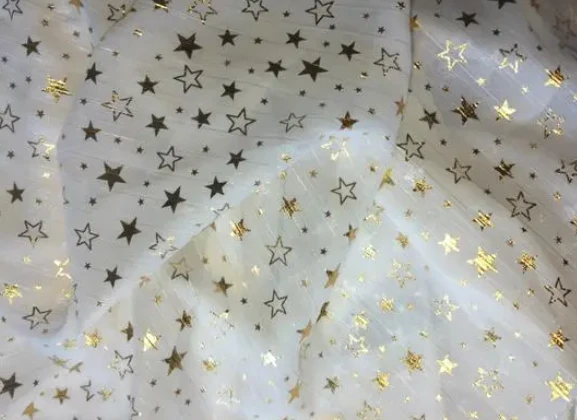
Thick board pulp is based on glue pulp. It is like glue pulp repeatedly printed with many layers. It can achieve a very neat three-dimensional effect. Generally speaking, the process requirements are relatively high, so small printing factories cannot print well. Some do not even have this technology, let alone print well. However, it is currently a printing technique that is popular all over the world. It is generally suitable for sports and leisure styles. The patterns generally use numbers, letters, geometric patterns, lines, etc. The lines should not be too thin. Some people also use it to print floral patterns, which are seen on leather or thicker fabrics for autumn and winter clothing.
Stone pulp
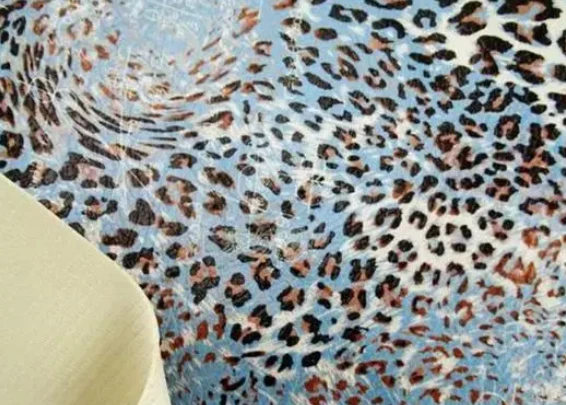
If glue pulp is neat, then stone pulp is casual, like pieces or strips of stone shapes or mud shapes, which is a relatively novel printing variety.
Foaming pulp
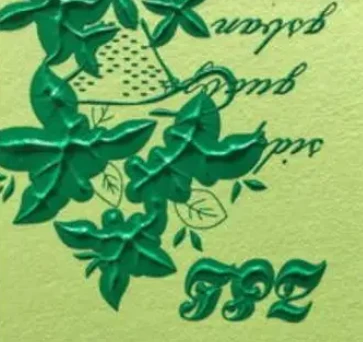
Foaming pulp, as the name suggests, is the pulp that has been foamed. It is also changed from glue pulp. First, print the prepared pulp on the fabric, and then process it with a high-temperature machine. The pattern will be foamed. It has a good three-dimensional sense and is a bit soft. However, after the clothes are worn and washed many times, the three-dimensional effect will gradually disappear and flatten.
Nylon pulp: Nylon pulp is said to have good tension. It may be named because it has a little elasticity like nylon. It feels thin and refreshing.
Drip glue
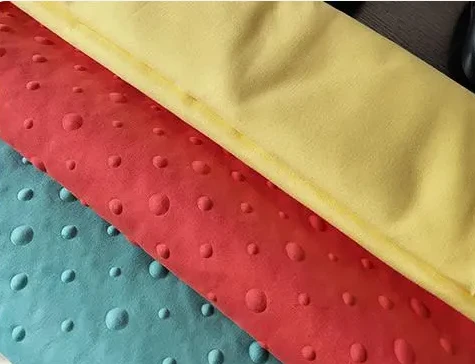
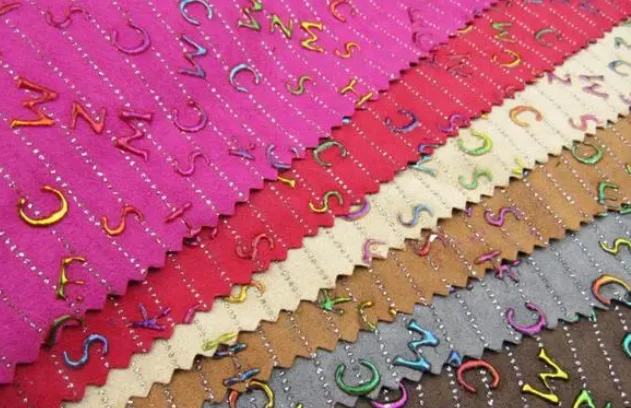
Drip glue is a variety that can have a more three-dimensional sense than thick plates. It is generally used to make drip glue stamps and is mostly used on men's clothing. When used on women's clothing, it will be used to shape flowers. The disadvantage of drip glue is that it is easy to break off if you use a lot of force.
Gel
Gel is a printing variety that is as transparent and elastic as gel, and the price is relatively expensive.
Planting beads
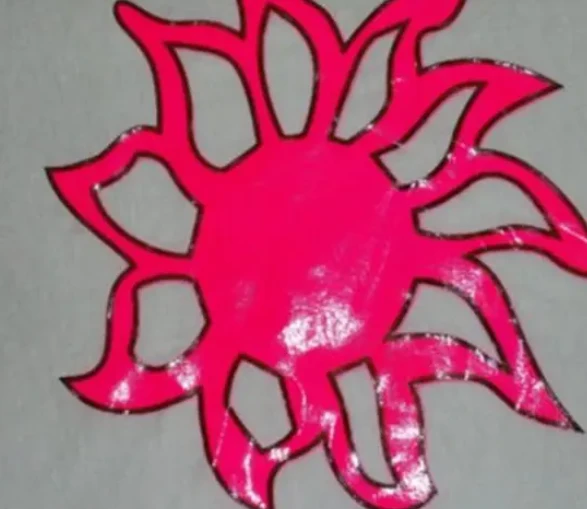
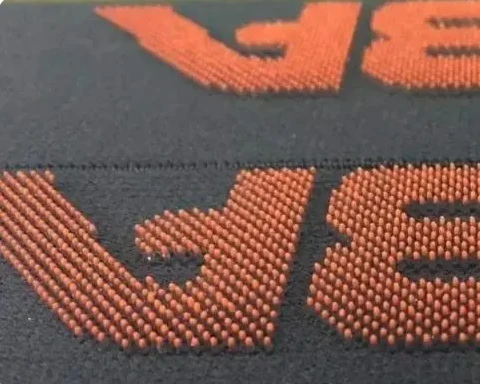
Planning beads is a process with relatively high requirements. Now only a few factories can do it well. Most factories almost do not have this process. Planting beads is also called toothbrush flowers. The finished product looks like a toothbrush whisker standing up. It is said that a flower needs to be printed 20 to 30 times before it is printed well. The height of the finished product can reach about 0.3CM. Its top is round and can be made of other colors. It seems to be topped with beads, so it is also called planting beads.
Velvet and glue pressing
Embossed is to make a pattern mold first, and then heat press it on the velvet or special glue to make it punch out the shape of the pattern. Velvet and glue pressing are both easy to fall off from clothes.
Hand-painted
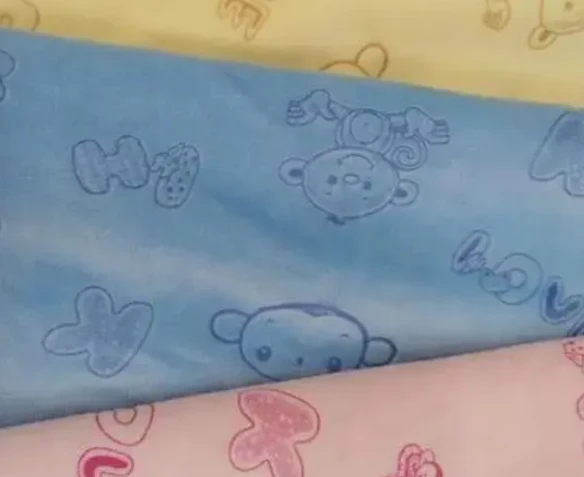
The hand-painted effect is a bit similar to printing, but it is more flexible and free, and can be regarded as equivalent to painting on clothes.