


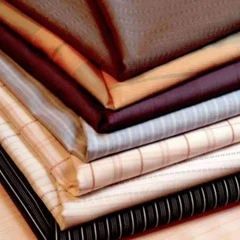
Corduroy fabrics must be familiar to people in the 50s and 60s. This kind of fabric was a high-end fabric in that era. In recent years, corduroy fabrics have been favored by more and more consumers. The corduroy velvet strips are round and plump, the fluff is wear-resistant, the texture is thick, the hand feels soft, and the warmth retention is good.
The raw material of corduroy is generally made of cotton, and it is also blended or interwoven with fibers such as acrylic, spandex, and polyester. Corduroy is a fabric with vertical piles formed on the surface, which is cut weft pile and consists of pile weave and ground weave. After cutting pile, brushing pile and other processing treatments, the surface of the fabric presents a wick-like obviously raised pile, hence the name.
Corduroy is also called corduroy, corduroy, and wading. Corduroy is a cotton fabric with cut weft raising and vertical piles formed on the surface. Because the velvet strips resemble strips of rush wicks, it is called corduroy. Corduroy has a thick texture and good warmth retention. It is suitable for making autumn and winter coats, shoe and hat fabrics and curtains, curtains, sofa fabrics and other decorative products. It is a fabric woven with a double weft weave and then cut pile. The cloth surface is cord-like pile fabric.
The corduroy weave adopts a weft double weave of two sets of weft yarns and a set of warp yarns. The ground weaves include plain weave and twill weave. Corduroy is woven from one set of warp yarns and two sets of weft yarns. One set of weft yarns (called ground weft) is interwoven with warp yarns to form a consolidated pile of ground cloth, and the other set of weft yarns (called pile weft) interweaves with warp yarns to form a regular float. The weft is cut to form fluff. Corduroy is woven by weft double weave, and then cut pile finishing. The fabric surface is a corduroy fabric, also known as corduroy.