


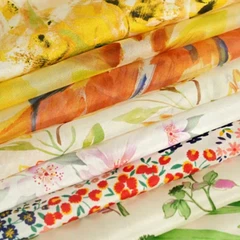
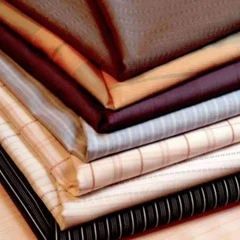
"Printing and dyeing do not separate families." As a qualified designer, you must master various printing and dyeing processes related to clothing, so that you can flexibly apply them to various styles and fabrics to enhance the depth of your design.
Pigment printing slurry: water slurry, glue, ink slurry, water-based glue, etc.
Method: Print the prepared slurry directly onto T-shirts or pieces of cloth through the screen. Suitable for solid single color or point, line, block multi-color printing:
Features: The advantage of water slurry is that it has good air permeability and is relatively cheap. The disadvantage is that the color is not bright enough and the coverage is poor. It is suitable for printing on cotton fabrics and cannot print light colors on dark fabrics.
The advantages of ink slurry are bright colors and strong covering ability, but the disadvantages are relatively poor air permeability and odor; it is not suitable for waterproof coated fabrics.
The performance of water-based glue and semi-glue is between that of ink slurry and water slurry.
silicone printing
Silk screen silicone is a non-toxic, harmless and environmentally friendly material. Screen printing silicone is a special silicone that can be firmly adhered to the surface of textiles, non-woven fabrics and other materials through screen printing.
Screen-printed silicone has a wide range of uses. The pattern of screen-printed silicone has a strong three-dimensional feel, is soft to the touch, highly transparent, bright, has a strong three-dimensional feel, is waterproof and age-resistant, does not discolor, is non-slip, breathable, resistant to high and low temperatures, and has good leveling properties. .
Foam printing
Printed directly on the T-shirt fabric through a screen, the foaming agent microcapsules rapidly expand when heated to form a three-dimensional concave and convex pattern, which has the advantages of good fastness, resistance to washing, and soft hand feel.
It is only suitable for single-color dot and line printing, not suitable for block and dot printing. Good results can be achieved when combined with other forms of printing processes.
Ink thick plate printing
The ink is directly printed on T-shirts or pieces of cloth through a thickened screen made of thick film photosensitive adhesive, forming a concave and convex pattern with a relief effect. It is suitable for single-color point, line and small area printing. It can achieve good three-dimensional visual effects when combined with other printing processes.
Electrostatic flocking printing
The adhesive suitable for electrostatic flocking is directly printed on T-shirts or pieces of cloth through a screen, and then the fiber fluff is planted in the adhesive in a directional, vertical and even manner through static electricity, and is heated and solidified. The three-dimensional relief pattern formed has a unique style.
Electrostatic flocking printing is suitable for printing single-color and multi-color patterns, and can be printed in conjunction with other printing products.
transfer velvet printing
Use electrostatic flocking to produce flocking paper, produce single-color flocking paper and multi-color flocking transfer paper, and then use screen printing to transfer the pattern to the T-shirt fabric through heating and pressure.
It has the advantages of simple and convenient operation, low cost, beautiful product, and washability. It can be suitable for transfer printing on T-shirts of various fabrics of different colors.
pearlescent print
The printing paste contains special inorganic crystals of titanium mica, which have over-surface reflective properties. Print it on T-shirts or pieces of cloth to create a pearl-like luster. Can be cross-printed with other printing processes. It can be printed with a variety of printing products and suitable for various types of patterns.
Gold and silver pink onion print
Print pastes containing gold glitter, silver glitter, laser glitter, colorful glitter, etc. on T-shirt fabrics of various colors to make the pattern shiny, gold rich, silver gorgeous, and laser colorful.
gold and silver foil
The adhesive is directly printed on the T-shirt fabric through the screen, and then the anodized aluminum and the T-shirt fabric are heated and pressurized, so that the "color foil" of the anodized aluminum is transferred to the T-shirt fabric to form a pattern. The fastness of gold and silver is relatively stable, but the color is relatively poor. Black cannot pass the inspection needle. T-shirts suitable for various fiber fabrics.
Three-dimensional hot stamping printing
Three-dimensional hot stamping technology is a composite technology that combines hot stamping technology and concave and convex embossing (three-dimensional embossing) technology. It uses corrosion or engraving technology to create a concave and convex pattern of hot stamping and embossing into a female and male mold that matches up and down. Mold embossing is a process that combines hot stamping and embossed embossing technology in one go.
discharge printing
The dye that can destroy the color of the fabric is printed on the fabric through the screen, and then heated and pressured to obtain various patterns, and then combined with other printing processes such as offset printing to obtain more colorful patterns, which are widely used in T A printing process for shirt pattern printing. (Removable dyes should be used to color fabrics, and the garments must be washed to remove residual dyes.)
It is very suitable for use in styles that need to reflect natural and layered patterns, such as denim, twill cotton, and Oxford cloth.
Easy-to-mix knowledge points: How to distinguish between discharge dyeing and piece dyeing?
The fabric has the same background color on both sides of the fabric, which is piece dyeing printing.
If the face color is different from the background color, and the background color is darker, it can be confirmed that it is discharge printing.
Reduction printing
Also known as burn-out printing or burn-out printing, it takes advantage of the chemical corrosion resistance of different fibers in interwoven or blended fabrics to apply a burn-out agent through the printing method to remove one of the fibers locally on the fabric, retaining other fibers to form a translucent pattern.
Sublimation transfer paper printing
Also known as "qi stain". Under high temperature conditions of about 200°C, the dye-based ink with sublimation conditions is directly transformed into a gaseous state without being liquefied, and the fabric is directly dyed into a specific pattern.
Transfer paper can be produced through lithographic printing (offset printing), screen printing, gravure printing, computer color inkjet printing, etc., and the pattern can be transferred to the T-shirt through heating and pressure. The graphics and text are detailed and realistic, have high color fastness, strong breathability and bright colors.
However, it is limited to high-temperature resistant partially synthetic white or light-colored fiber fabrics, such as polyester, acrylic, etc., and cannot be applied to cotton fiber fabrics.
Computer digital printing
Use computers and related software to edit images and then input them into high-tech digital T-shirt printing equipment for printing. It has the characteristics of bright color, clear pattern, no pollution, and no printing volume.
However, special materials cannot be printed, such as: foam, gold and silver glitter, reflective, glue beads, thick plates, discharge dyeing, etc.
Heat transfer printing
Also known as offset transfer or photographic plate transfer. It utilizes a combination of lithography, screen printing and chemical engineering. It has the characteristics of clear graphics and text, can realistically express natural scenery, can achieve photo-like quality, and has strong washability. Through heating and pressing, it can be printed on T-shirt fabrics of various types and colors.
Reflective printing
Special reflective material glass beads are added to the ink resin, which is directly printed on T-shirt fabrics of various colors through a screen. In places with insufficient sunlight or at night, the light source is emitted by using its own light and reflecting external light sources.
This process is suitable for printing various types of fabrics.
Optically variable printing
Several types of high-tech ultraviolet light are added to the dye to excite Mars microparticles, and the color changes instantly when exposed to ultraviolet light.
Easy to crack and not washable. The design and application recommendations are the same as those for offset printing.
Bead printing
Planting beads is also called toothbrush flower. The finished product looks like toothbrush whiskers standing up one after another. It is said that a flower needs to be printed twenty or thirty times before it is printed well. The height of the finished product can reach about 0.3CM. The top of it can It is in the shape of a round bead, and other colors can be made on it, as if it is holding beads on top, so it is also called planting beads.
stone slurry
If glue is neat, then stone grout is casual. Have you ever noticed the footprints left behind when you walk on a muddy road? It has almost the same effect. It looks like blocks or strips of stone or mud shapes. It is a relatively new type of printing. Mostly seen in casual men's clothing.
cracks
Printing paste containing special components that shrink when exposed to heat and become hardened and brittle.
It is directly printed on the T-shirt fabric through the screen and then dried to naturally form a special texture crackle effect like a turtle's back. It can be combined with a variety of printing techniques and suitable for various types of patterns.
Types of dyeing suitable for garment design
hanging dye
The fabrics are made of cotton, wool, linen, silk and other natural fabrics. Only nylon is a chemical fiber material suitable for this process. Other chemical fiber materials are not suitable for this process.
It is best to use pure white gray fabrics. If the fabric is dyed in the early stage and undergoes post-processing such as bleaching and color fixation, some chemicals will be added during the process. Later, when the garment is dyed, it will affect the dyeing effect and cause problems such as color blooming, increasing losses and risks. .
The fabric needs to be degreased, shaped, washed and other treatments in the early stage to ensure the stability of the size of the garment. (In the early stage, it is best for the garment dyeing factory and the fabric factory to communicate directly about the specific operation of the fabric.)
Hanging dyeing is to fix the clothes on a hanger and then partially immerse them in the dye solution to produce different color effects up and down. It can produce a gradual, soft and peaceful visual effect from light to dark or from dark to light on fabrics and garments. In the past, it was mostly used in cotton, linen or literary style clothing. In recent years, more and more casual/fashion brands have also used it:
Examples of casual wear combined with hanging dyeing and printing
In recent years, the hanging dyeing process has been released by first-line brands such as PRADA and FENDI. This special hazy gradient dyeing technique has become an indispensable dyeing and finishing method for clothing.
Advantages: The color is layered. Disadvantages: The output is not high, there are tank differences, and the color is inaccurate.
Tube dyeing
Cone dyeing is dyeing in the form of cones, generally used to dye yarn or pieces of cloth. This would not be used in ready-to-wear designs.
Duanran
Section dyeing is to lay the skeins flat and then spray them with different colors at certain design intervals to create the effect of sections of color. Advantages of section dyeing: It can create rich color effects. Disadvantages of segment dyeing: The disadvantage is that regular patterns are easy to appear and the color fastness is not very good. Usually dyed yarn.
Garment dyeing
Just make the clothes and then dye them. Garment dyeing is a process especially for dyeing cotton and ready-made garments. It is also called finished product dyeing. Advantages: good texture and good hand feel. Disadvantages: Difficult to control size.
spray dye
The dyeing method is similar to space dyeing, except that the dye is sprayed irregularly. Pros: Color variation. Disadvantages: It requires manual labor and is difficult to process.
tie dye
It means to tie the clothes in a certain way to produce uneven dyeing, thus forming irregular geometric patterns. Tie-dyed fabrics: Hand-made tie-dyed fabrics are generally made of cotton, linen, wool, etc. When choosing, different fabrics are mainly selected according to the different products. (Pure natural fiber fabric)
Final summary:
Printing effect types
Glue printing
semi-glue printing
watermark
Ink printing
silicone printing
Foam printing
Ink thick plate printing
pearlescent print
Gold and silver pink onion print
gold and silver foil
flock printing
Discharge printing
sublimation transfer
Computer digital printing
Heat transfer printing
Optically variable printing
Reflective printing
Stone pattern
cracks
Suitable for garment design and dyeing types
hanging dye
spray dye
tie dye
Garment dyeing
batik
Pattern expressions are diverse.
Designers who are good at playing with patterns often combine different printing techniques, combine printing with dyeing, and combine special clothing techniques with embroidery to enhance the depth of the design. In short, the flexibility of the printing and dyeing process is too great, so the design extension possibilities should not be too rich~