


Digital Printing Materials: Which fabrics are best for digital printing?
Digital textile printing is the latest innovation in the textile printing industry. More and more printers are turning to digital printing and benefiting from the competitive advantage it offers them, fast production speeds and the possibility to print complex designs and fine patterns. Before deciding whether your printing company is interested in digital textile printing, it is important to understand the possibilities of digital printing in terms of materials that can be digitally printed.
Detailed explanation of digital textile printing technology
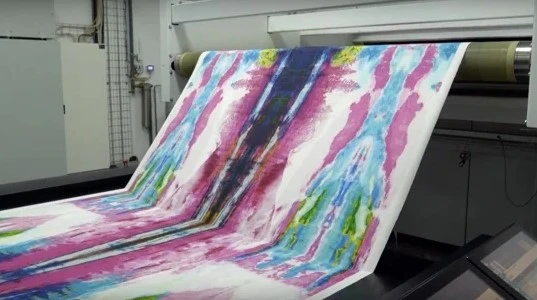
Digital textile printing is an inkjet-based printing method that enables printers to print high-quality patterns on a variety of fabrics. However, some fabrics are not suitable for this specific printing technique. In this article, I'll detail which fabrics are best for digital printing. Which fabrics can be used for digital textile printing and which cannot?
To fully understand why certain fabrics cannot be used for digital printing, it is important to understand the technology behind digital printing. In digital printing, the material first needs to be pre-processed. The material is then passed through the inkjet printer at high speed. Digital textile printing machines use printable designs from digital data files, read the correct color information, and print the colors onto the digital printing material.
The fabric is colored by tiny ink droplets produced by numerous print heads. These printheads are positioned a few millimeters above the substrate (for example, SPGPrints Archer+ technology enables a distance of up to 4mm between the printhead and the substrate).
Digital printing materials
In digital textile printing, multiple printheads ensure high-quality designs and enable fast productivity. However, some materials cannot be used for digital printing due to the proximity of the print head to the fabric. For example, fabrics with a lot of loose threads can come into contact with the print head and cause damage.
Digital textile printing technology can be used on woven and knitted fabrics. Below, I will explain in detail which digital printing materials are suitable for digital printing and which materials are not suitable for digital printing. I will also mention which inks work well with digital printing materials. If you'd like to learn more about these inks, download our Ink Selection Guide here.
cotton
Cotton is a natural fiber used especially for clothing in the fashion industry, mainly due to its high moisture control, comfort and durability. With a digital textile printing machine, you can print on cotton. To achieve the highest possible quality, most digital printers use reactive ink, as this type of ink provides the highest wash fastness for printing on cotton.
Viscose fiber
Viscose fiber is also one of the digital printing materials widely used in the fashion industry. As with printing on cotton, you get the best results when printing on viscose using reactive inks.
wool
It is possible to print wool with a digital textile printer, but it depends on the type of wool you are using. If you want to print on "fuzzy" wool - that is, one with a lot of loose threads sticking out - the print head must be as far away from the substrate as possible. The thickness of the wool yarn is five times the diameter of the printhead nozzle, so it can severely damage the printhead.
Therefore, it is important to choose a digital printer that can place the print head farther away from the substrate. SPGPrints' Archer+ technology supports a 4mm printhead distance compared to the typical 1.5mm nozzle-to-fabric distance offered by other printheads, which enables you to digitally print on any type of digitally printed material - even shaggy wool.
silk
Another natural fiber that can be used as a digital printing material is silk. Silk can be printed with reactive inks (when high fastness is a priority) or acid inks (when color gamut is a priority).
polyamide lycra
Polyamide Lycra is a fabric primarily used in swimwear. It can be used as a digital printing material and is best used with acid inks. Use acid inks for maximum color brightness, wash fastness and resistance to salt water and chlorine.
Polyester
Polyester has become increasingly popular in the fashion industry in recent years. However, dispersion inks, the most commonly used inks on polyester fibers, do not print well on high-speed digital printers. A typical problem is ink mist contaminating the printer.
As a result, printers have turned to sublimation printing on paper and, more recently, successfully using sublimation inks for direct printing on polyester fabrics. The latter is more expensive for the printer because a belt system is required to secure the fabric, but it saves the printer paper costs and requires no steaming or washing.
Overall, generally speaking, the fastness of sublimation printing on polyester fiber will be slightly lower than that of disperse ink printing. But in the fashion world, it's an acceptable compromise for sustainability.
mixed fabrics
Mixed fabrics (fabrics composed of two different types of materials) can be a challenge for digital printers. This is because digital textile printing can only use one type of ink at a time. Since all digitally printed materials require different types of inks, you must use inks that are suitable for the materials that make up the majority of the fabric. This can cause the ink to fail to adhere to another material used in the fabric, resulting in a lighter color.
Typically, digital printing machines can handle mixed digital printing materials with a minimum color separation of 70-30%. For example, a blend of 70% cotton and 30% polyester can be printed with reactive inks using a digital printer. However, digitally printed materials with 60-40% color separation will limit color depth.
Produce high-quality designs on a variety of digital printing materials
In short, the question "Which fabric is best for digital printing?" really depends on your end product. As long as the correct ink is used, almost any fabric can be used as a digital printing material.