


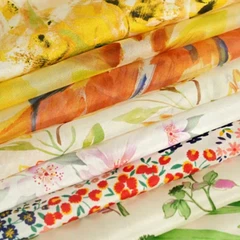
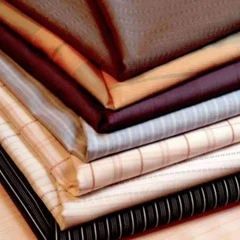
The advantages of printed fabrics mainly include:
Diverse and beautiful patterns: The patterns of printed fabrics are various and beautiful, which solves the problem of only solid-color fabrics without printing in the past, and greatly enriches people's material life enjoyment.
Wide range of use: It can not only be worn as clothing, but also can be mass-produced to meet different needs.
Good quality and low price: Ordinary people can basically afford it and are loved by them.
Historical and cultural value: Printed fabrics are fabrics handed down from ancient times, with characteristics such as simplicity and nature, relatively primitive processing techniques, and colors close to farmers' life.
The disadvantages of printed fabrics include:
Limitations of patterns and colors: The patterns of traditional printed fabrics are relatively simple, and the colors and patterns are subject to greater limitations.
Discoloration and fading problems: Printing cannot be transferred on pure cotton fabrics, and printed fabrics may also fade and fade after being used for a long time.
Technical limitations: Some printing technologies (such as thermal sublimation) cannot print pure cotton fabrics and black fabrics unless white fabrics are printed in black.
Cost issues: Some printing technologies (such as digital direct printing) are costly and not suitable for large-volume orders.
In summary, printed fabrics are popular among consumers for their rich patterns and wide range of applications, but they also face challenges in terms of pattern and color limitations, discoloration and color decay problems, and technical costs.