


What are the classification standards for stretch fabrics?
What are the classification standards for stretch fabrics? First, we need to look at the direction of elasticity. There are mainly two types of weft elastic, warp elastic and four-side elastic. The scam is to look at the nature of elasticity. General stretch fabrics are made of spandex yarn to provide elasticity, but there are also high-elastic yarns that do not contain spandex yarn, such as polyester T400. These two classification standards, including various raw materials, can also be made into various tissues and thicknesses, and the categories are very rich.
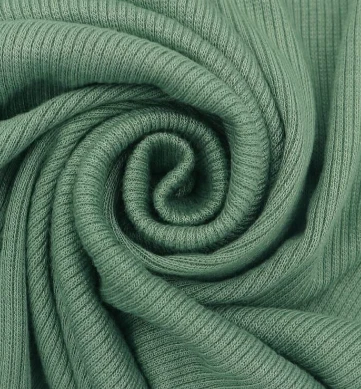
Stretch fabric is a very common type of textile. The popular ones are polyester and nylon weft elastic bands and four-side elastic bands, as well as cotton weft elastic bands, four-side elastic bands, etc. There are also many interwoven stretch fabrics, such as polyester-cotton interwoven stretch fabrics, nylon-bonded warp stretch grosgrain fabrics, etc. With the popularity of man-made fibers, such as rayon stretch fabrics, modal polyester stretch fabrics, Tencel stretch fabrics and Tencel polyester, Tencel brocade stretch fabrics are also popular. In recent years, stretch fabrics such as acetate polyester and acetate fiber brocade have also become popular. Therefore, stretch fabrics can be said to occupy half of the fabric industry. The combination of raw materials is endless, and the application scenarios are also very wide.
Therefore, from the perspective of the combination of raw materials, the categories of stretch fabrics are countless. It can be said that any textile fiber can be used to design stretch fabrics, and the combination changes are endless, so the editor of Zhongran classified stretch fabrics from the direction of elasticity and elastic performance. The direction of elasticity is nothing more than weft elasticity, warp elasticity and four-sided elasticity, and these three types of stretch fabrics can be found everywhere. Of course, what kind of elasticity is made depends on the difficulty and cost-effectiveness of I. For example, warp elastic brocade grosgrain is far superior to weft elastic bands in terms of cost, elasticity and elastic effect, but many other stretch fabrics are weft elastic bands to save costs, and the process difficulty will be very small. Therefore, the design and development of stretch fabrics should focus on scientific rationality. The elasticity of general stretch fabrics is because it contains spandex yarn. Good spandex yarn will have very good elasticity, which is very suitable for leisure, bodybuilding and sportswear. However, spandex will affect intrinsic indicators such as color fastness, so in recent years, stretch fabrics without spandex have been promoted and popularized, and the most common one is polyester T400. However, stretch fabrics without spandex are often elastic, and the advantages are stability and high color fastness.
Stretch fabrics are not only woven fabrics, but also knitted stretch fabrics are abundant, and are widely used in fashion design, home textiles, home decoration, etc. Especially modern people pursue a casual and fashionable style, and the demand for stretch fabrics is greater. Therefore, people who do textiles can ignore the development and promotion of stretch fabrics, and people who make clothes cannot do without stretch fabrics.