


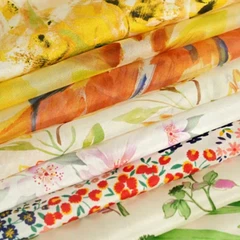
What is digital fabric printing?
Digital fabric printing is a relatively new method of printing fabrics. Just like when you print photos with an inkjet printer at home.
Simply put, digital printing is a fabric inkjet printer. The printer feeds a roll of fabric into a large-format inkjet printer and prints the pattern directly on the fabric.
Digital printing technology began to appear in the 1990s. Initially, it involves printing on transfer paper, which is then heat set onto fabric (dye sublimation). The technology continues to evolve and now we can sometimes print directly onto fabric.
Digital printing reduces waste
One of the biggest advantages of digital printing is the reduction of waste compared to some other printing methods.
With traditional printing, designers would have to print hundreds or thousands of meters at a time to save costs. This is because screen printing requires making a unique screen for each color in the design.
Anything that cannot be used or sold will eventually become waste. With digital printing, designers can print up to a meter of fabric on demand. This means significantly less fabric and ink waste.
Traditional screen printing uses large amounts of ink, energy and water. Digital printing saves energy and water because there is no need to clean the screen to apply new colors like traditional screen printing.
Digital printing using water-based dyes
Water-based inks are environmentally friendly. Contains no harmful chemicals. While some screen printers use water-based inks, many screen printers use Plastisol, which is a hazardous waste and must be disposed of accordingly
Digital printing is simple and consistent
Incredible printing details. Digital printers spray very fine droplets of ink over targeted areas, which means you can get very clear prints. The printing resolution is higher and the edges of the design are clear and sharp. With traditional screen printing, you risk ink bleeding and printing errors under the screen. Each batch is slightly different.
Digital fabric printing can accurately reproduce very fine lines with high color consistency. So a meter of fabric printed six months later will look exactly the same as a meter of fabric printed today.
It is for these reasons that we choose digital printing as our preferred fabric printing method.
Digital Printing Fabric Show
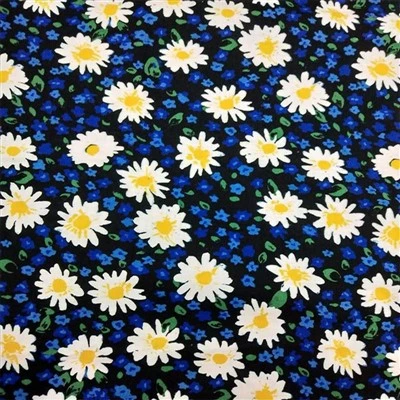
Digital Printing On Canvas Fabric

Cat Digital Printing Cotton Poplin
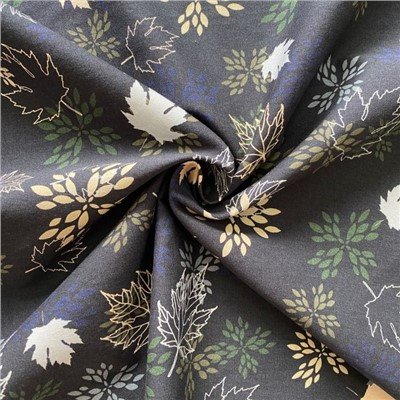
Maple Leaf Digital Printing Cotton Canvas
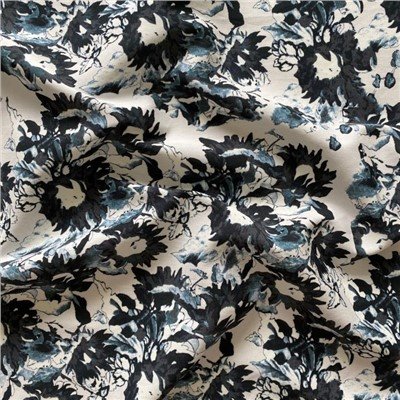
Digital Printing Cotton Fabric

Eco Friendly Digital Printing Silk Cotton Poplinn Fabric

Digital Printing On Ramie Fabric