


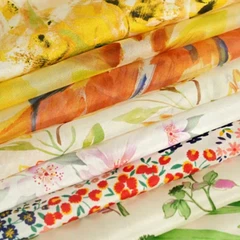
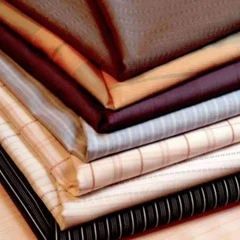
In the textile digital printing industry, some textiles will come off the line when encountering the printing machine nozzle, causing damage. The following editor explains in detail which materials are suitable for digital printing and which are not suitable:
1. Cotton is a natural fiber, especially in the fashion industry. It is widely used in clothing because of its high moisture resistance, comfort and durability. Using a textile digital printing machine, you can print on cotton cloth. In order to achieve the highest possible quality, most digital printing machines use reactive inks, because this type of ink provides the highest washing fastness for printing on cotton cloth.
2. Viscose Another natural fiber widely used in the fashion industry is viscose fiber. It is feasible to use a digital printing machine to print on viscose. Like printing on cotton cloth, printing on viscose with reactive ink can achieve the best results.
3. It is feasible to use a digital printing machine to print wool on wool fabrics, but it depends on the type of wool fabric used. If you want to print on "fluffy" wool fabrics, this also means that there are a lot of fluff on the surface of the fabric, so the nozzle must be as far away from the fabric as possible. The diameter of the wool yarn is five times the diameter of the nozzle in the nozzle, so it will seriously damage the nozzle. Therefore, it is very important to choose a digital printing machine that allows the printing nozzle to print at a higher position from the fabric. The distance between the nozzle of the print head and the fabric is generally 1.5 mm, which may allow you to digitally print on any type of wool fabric.
4. Silk Another natural fiber suitable for digital textile printing is silk. Silk can be printed with reactive inks (better color fastness) or acid inks (broader color gamut).
5. Polyamide Lycra Polyamide Lycra is a fabric mainly used for swimwear. You can use a digital printing machine to print on polyamide Lycra, preferably acid ink. Using acid ink, you can get the highest color brightness, the best washing fastness, salt water and chlorine bleaching fastness.
6. Polyester In the past few years, polyester has become an increasingly popular fabric in the fashion industry. However, the most commonly used dispersion ink for polyester printing does not work well when used on high-speed digital printing machines. The typical problem is that the printing machine is contaminated by ink flying. Therefore, printing factories have turned to paper-based dye sublimation transfer printing, and recently successfully switched to using dye sublimation ink to print directly on polyester fabrics. The latter requires a more expensive printing machine, because the machine needs to increase the guide belt to fix the fabric, but it saves the cost of paper and does not need to be steamed or washed.
7. Blended fabrics Blended fabrics refer to fabrics composed of two different types of materials, which is a challenge for digital printing machines. In digital textile printing, one device can only use one type of ink. Since each material requires a different type of ink, as a printing company, it is necessary to use ink that is suitable for the main material that constitutes the fabric. This also means that the ink will not be colored on another material, causing the color to become lighter and white.