


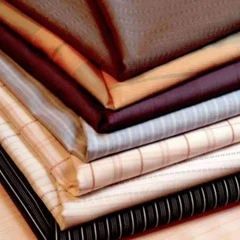
The English name of denim is Denim, which is a thicker yarn-dyed warp twill. The warp yarn is dark in color, generally indigo blue, and the weft yarn is light in color, generally light gray or plain white yarn after scouring. Also known as indigo labor cloth.
Denim began in the western United States. It is said that Levi Strauss, a Jewish businessman in the United States, used the rough canvas originally used to make tents to make the first LeviS jeans for miners at the time, a tough and durable work clothes. It meets the needs of workers and is quickly welcomed, which has triggered a series of evolutions.
Since the end of the 1970s, denim has undergone many major developments in China and has become an important international producer of denim. Today's denim can be divided into ring-spun denim, slub denim, weft stretch denim and special color denim.
Denim ready-made garments can endure for a hundred years, not because of the changes in style design and production process, but because of the ever-changing and innovative finishing process. Often denim garments produced by the same batch of orders, different washing methods will produce different appearance effects, and the response to the market in different periods will be different. In other words, the most important link that determines the effect of denim ready-to-wear styles is not in the design department and production department, but in the finishing and washing department.
1. Ordinary washing water. Early jeans did not have the concept of washing water. They only had to be washed with water before wearing to make the fabric softer and more suitable for the body.
2, Stone washing (STONE WASH) Stone washing is to add a certain size of pumice to the washing water, so that the pumice and clothes are polished, and the water level in the polishing tank is performed at a low water level where the clothes are completely saturated, so that the pumice can be in good contact with the clothes .
3. Enzyme washing (ENZYME WASH) enzyme is a kind of cellulase, which can degrade the fiber structure at a certain pH value and temperature, so that the cloth surface can be gently faded and depilated (produce "peach skin" Effect), and get a lasting soft effect. Stone can be used together or instead of stone. If it is used together with stone, it is usually called ENZYME STONE WASH.
4. Sand washing (SAND WASH) uses some alkaline and oxidizing additives to make the clothes have a certain fading effect and old feeling after washing. If it is matched with stone grinding, the surface of the cloth will have a soft white cream after washing. The fluff, plus some softeners, can make the fabric soft and soft after washing, thereby improving the comfort of wearing.
5. Chemical washing (CHEMICAL WASH) chemical washing is mainly through the use of strong alkali additives to achieve the purpose of fading. After washing, the clothes will have a more obvious sense of oldness. Adding softeners will give the clothes a soft and plump effect.
6. Rinse (BLEACH WASH) In order to make the clothes have a white or bright appearance and a soft feel, the clothes need to be rinsed, that is, after ordinary washing with clean water, heat it to 60°C, and add an appropriate amount according to the bleaching color. The bleaching agent (bleaching agent), the color to the board within 7-10 minutes.
7. Destroy wash (DESTROY WASH) garments are polished with pumice stone and treated with additives, and some parts (bone positions, collar angles, etc.) will be damaged to a certain extent, and the clothes will have a more obvious worn-out effect after washing.
8. Snow washing soaks the dry pumice with potassium permanganate solution, and then directly polishes it with the clothes in a special rotating cylinder, and polishes the clothes with the pumice stone, so that the potassium permanganate oxidizes the friction points, and the cloth surface is not Regular fading, forming white dots resembling snowflakes.